September 22, 2026 · 4 min read
How to structure a novel before you write it (without killing the fun)
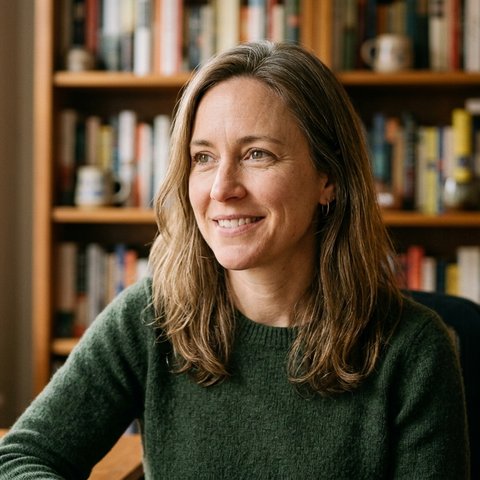
Claire Tarn
Publishing Editor at Psitta
Somewhere along the way, planning a novel became a personality test. You are either a plotter, who builds the whole house on paper before touching a brick, or a pantser, who starts walking and trusts the road to appear. Writing sites love this quiz. Writers take it, pick a side, and defend it.
I have stopped believing in the quiz. After years of watching manuscripts succeed and fail, I can tell you where most finished novels actually come from: the unglamorous middle. Some people call this being a "plantser." I call it having a blueprint — one page, not forty, written before the drafting starts and revised without guilt while it happens.
Here is why the two pure camps struggle, and then the blueprint itself, which you can build in an evening.
The full outline fails for a reason nobody warns you about: it spends the story. Discovery is a large part of what makes drafting bearable, and a forty-page outline discovers everything in advance, in summary form, when the material is cheapest and least alive. Many careful outliners reach chapter one already a little tired of their own book. The outline was so complete that the draft feels like data entry.
Writing with no plan fails differently, and later. The opening chapters pour out, because openings need no architecture. Then the middle arrives, the part of a novel that runs on cause and consequence rather than momentum, and every session begins with the hardest question in writing: what happens now? I wrote about this in the last post — the middle is where unplanned drafts go to the drawer. A pantsed draft can absolutely be finished, but usually by a writer with the experience to hold a shape in their head. If this is your first or second book, you probably do not have that muscle yet. That is not a flaw. It is just where you are.
So: the blueprint. One page. Five things on it, and nothing else.
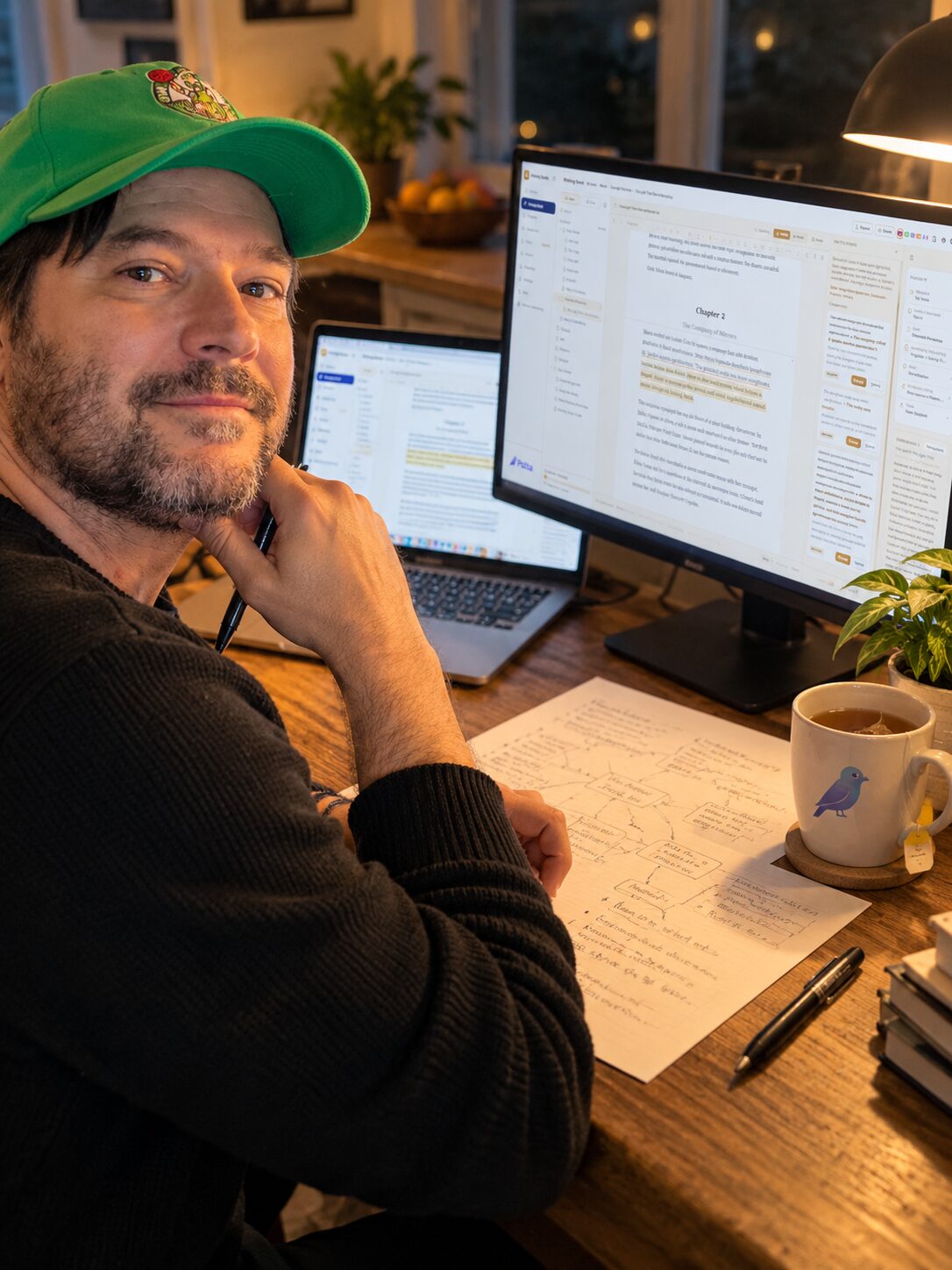
First, the promise. One or two sentences on what kind of experience this book offers a reader: "A quiet woman discovers her late mother's second life, and the search costs her the family she thought she was protecting." Notice this is not a theme or a genre label. It is the book as a reader would feel it. Every structural decision you make later gets tested against this sentence.
Second, the four corners. Not thirty scenes — four. The opening situation, the event that makes the story unavoidable, the worst point, and the ending as you currently imagine it. One sentence each. You already know most of these; the ending has probably lived in your head for months. Writing them down does something subtle: it turns the ending from a dream into a destination, which means every scene can now be judged by whether it moves toward it.
Third, the middle question. The middle of your novel is held up by one load-bearing question the reader keeps asking. Will she tell him? Who is paying for the silence? Can this marriage survive what he found? Write the question down. When you are lost in chapter eleven, the way out is almost always to make that question louder, complicate the answer, or make someone lie about it.
Fourth, the cast card. Every named character in one line each: what they want, and what they will not do to get it. The second half of that line is the useful half. Plot, at street level, is mostly people refusing things until they cannot afford to anymore.
Fifth, the next three scenes. Only three. Not summaries — intentions: "Marta finds the letter but cannot read it in front of him." This is the rolling edge of the blueprint, and it is the only part you maintain while drafting. Each time you finish a scene, you add one sentence to the far end, so you are always writing toward something you can see, without ever having spent the whole story in advance.
That is the entire method. It preserves what the pantser rightly refuses to give up — the daily discovery, the scenes that surprise you — because ninety percent of the book is still unwritten in any form. And it provides what the plotter rightly insists on: a destination, a load-bearing middle, and a tomorrow that starts with an instruction instead of a blank page.
Two rules keep the blueprint healthy. It is allowed to be wrong: when the draft produces something better than the plan, the draft wins and the page gets updated — five minutes, no ceremony. And it is not allowed to grow: if your one page is becoming ten, you are not planning anymore, you are drafting in disguise, and the real draft is standing outside the door.
One evening. One page. You can dislike outlines all you want — this is not really one. It is closer to a note you leave yourself so that future-you, tired on a Tuesday in the middle of chapter eleven, is never alone in the dark with the whole book.
If you want a place where this blueprint lives next to the manuscript instead of in a separate file you forget to open, that is exactly what the blueprint panel in Psitta Studio is for.
Psitta is the writing studio that helps you go from first idea to finished manuscript.